Garden Paths That Give Planting Room to Grow
Garden paths shape how planting grows and is seen. Learn to spot cramped borders, test a route with a hose and choose changes that leave plants room.
Is your garden path squeezing plants, or leaving a border awkward to grow and maintain? A garden path affects more than the view: its position shapes where roots can spread, where rain runs and how much room remains for cultivation. Before moving paving, look at the plants and the ground beside it.
Check whether the path is crowding the border
A narrow strip between a path and a fence can leave little useful soil for planting. Plants may lean over the surface in search of light, while regular trimming keeps them small without resolving the lack of growing room.
Look at the border from both sides. Note where plants are repeatedly cut back, where bare soil persists and where foliage obstructs the route. If the cramped section is short, simplifying the planting may be enough; if several plants compete for the same narrow ground, shifting the path or reshaping the bed may make better use of the space.
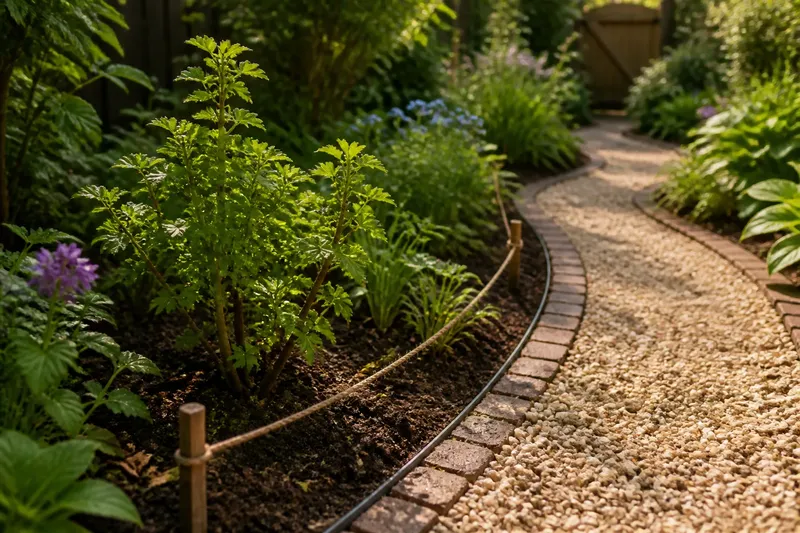
Use a garden hose or rope to mark a possible new edge before digging. Walk the route, then check whether the revised line leaves a coherent bed rather than creating a thin wedge at its other end. The plants suited to a border depend on local conditions, so consider light, soil and mature spread when deciding what belongs there.
Let the route leave room for roots and maintenance
A path placed close to a shrub or small tree can make routine work awkward. There may be little room to prune, mulch or water without standing on the bed, and plants can eventually press against the edge.
Check the plant’s expected mature spread rather than judging only by its current size. A nursery label or reliable plant reference can help; where the plant is unknown, identify it before moving paving or cutting roots. Keep soil access in mind too: a border needs room for the gardener, not just the plant.
Say you have an invented garden with a young currant bush beside a gravel path. Its label indicates that it will become broader than the strip currently left beside the stones. If you mark a wider bed edge with rope, walk the route and see that the path remains clear, then move the edge and reserve the added soil for the bush, the expected result is more room to pick and prune without repeatedly cutting branches back over the path. The trade-off is less gravel surface; if that would make access difficult, keep the route and relocate the bush instead.
Notice where rainwater goes after changing a path
A path can redirect rain towards a bed, a wall or a low point. Changes to the surface or its edge may alter that flow, especially where paving is firm or the ground already drains slowly.
After ordinary rainfall, observe whether water runs along the path, collects at an edge or reaches plants that prefer drier soil. If water ponds beside a plant, avoid adding more paving or soil before understanding the cause. A permeable surface may allow more water through, but the result still depends on the ground beneath it.
Where runoff could affect a building, neighbouring land or a boundary, check local requirements and seek advice from a suitable drainage professional. Do not direct water elsewhere simply because that is the easiest place to send it.
Choose a path edge that suits the planting
Brick, gravel and stepping stones meet a border in different ways. Brick makes a firm edge that can contain loose soil; gravel gives a softer transition but can migrate into the bed; stepping stones leave more ground exposed between them, which can suit low planting if the route remains comfortable to walk.
Consider how you will maintain the boundary. A metal or timber edging strip can help keep materials separate, but it also needs to suit the soil and the way water moves through the area. Avoid relying on a neat edge to solve a border that is simply too crowded.
What is not worth the effort is repeatedly sweeping stray gravel back from a bed while leaving the edge that lets it escape unchanged. Adjust the boundary or choose a surface that better suits the planting, rather than making the broom a permanent member of the gardening team.
Which path changes help plants most?
How much space should I leave beside a plant?
There is no single spacing that suits every plant. Check its expected mature spread and leave enough room for growth and routine care; if the path would still be blocked, choose a smaller plant or move the route.
Can I move a path without disturbing established roots?
That depends on the plants and how close their roots are to the proposed work. Identify valuable or uncertain plants first, and ask a qualified arborist or horticultural professional for advice if the change could affect a mature tree or large shrub.
Will gravel harm plants in a border?
Gravel is not inherently harmful, but it can mix into soil, complicate cultivation or alter the surface around plants. If it keeps spreading, install a suitable edge or replace it with a surface that is easier to contain.
How can I tell if a path is redirecting rain?
Observe the area after rainfall and note where water flows or remains pooled. If it collects against a building or crosses a boundary, pause work and seek appropriate local or professional guidance before changing the route.
Use these checks before moving the path
- Check whether foliage regularly blocks the walking surface; if it does, move the edge or choose a plant with a smaller mature spread, and if it does not, leave the route in place.
- Check for persistent bare soil in a narrow strip; if the strip cannot support the intended planting, widen the bed or simplify it, and if plants are growing well, avoid unnecessary digging.
- Check the plant label or a reliable reference for mature spread; if the plant will outgrow its space, shift the path or relocate the plant, and if it will fit, retain the current line.
- Check for gravel or soil crossing the boundary; if materials keep mixing, add suitable edging or change the surface, and if the edge stays clean, do not add another component to maintain.
- Check where rainwater flows after rainfall; if it ponds by a wall or crosses a boundary, seek suitable advice before altering the route, and if it drains without causing a problem, keep the existing fall.
- Check whether the proposed line leaves a usable bed rather than a thin remnant; if it creates a sliver, redraw the route or simplify the planting, and if the bed remains accessible, mark the line for a trial walk.
A garden path should leave enough usable soil for the plants and enough clear surface for the people who care for them. Mark a proposed change with a hose, check plant spread and observe rainwater before committing to a new edge. The best adjustment is often the one that makes cultivation easier without creating a fresh problem elsewhere.