Mulch or Bare Soil for Growing Plants
Mulch or bare soil affects sowing, seedling care and soil conditions. Choose a surface that suits each crop’s growth stage and makes routine tending easier.
Should you use mulch or bare soil to help plants grow? For established plants, a suitable cover can protect the open ground around them; for freshly sown seeds, bare soil makes sowing and seedling checks easier. The right choice follows what is growing and what it needs next.
Match the soil surface to the growth stage
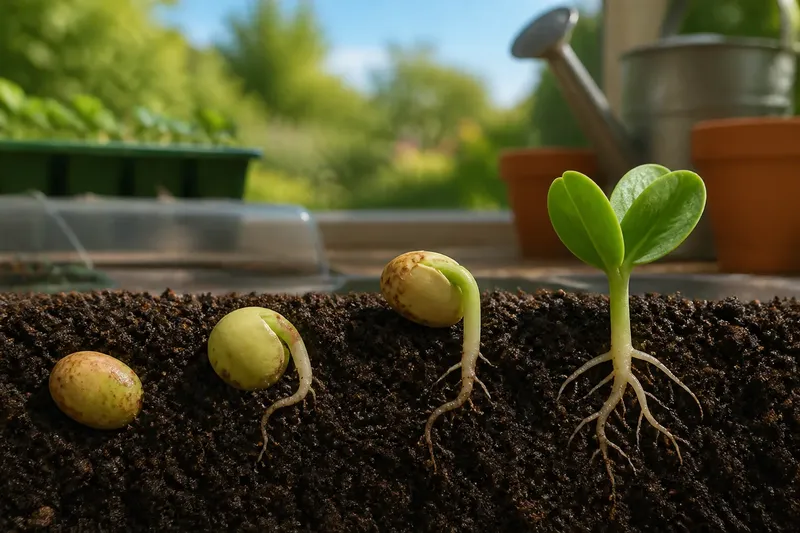
Seeds need contact with a prepared seedbed, and small seedlings need to remain visible. An established shrub or perennial has different requirements: its roots occupy the bed, while the open soil between plants may benefit from a surface cover.
Notice how the bed behaves after rain or watering. Runoff, a hard crust, splashed soil or rapid drying can signal that exposed ground is creating extra work. If the surface remains workable and you regularly sow or hoe there, keeping it open may be more useful.
- Observe whether a row is newly sown; if it is, leave the row open, otherwise consider covering only the spaces between established plants.
- Observe whether young plants are hard to distinguish from weeds; if they are, keep the surrounding surface clear, otherwise add a suitable cover without hiding their crowns.
- Observe whether rain leaves a crust or splashes soil onto foliage; if it does, cover open ground between plants, otherwise retain bare patches where sowing or hoeing is planned.
- Observe whether weeds are already present; if they are, remove them before applying mulch, otherwise spread the chosen cover on clear ground.
- Observe whether the soil is dry before covering; if it is, water first, otherwise proceed with the surface layer.
- Observe whether you expect to dig or resow the area soon; if you do, leave it open or use a loose material that is easy to move, otherwise choose a cover suited to the established planting.
Choose mulch for the planting, not its appearance
Organic materials include leaf mould, compost, chopped leaves and bark. They break down over time, but differ in texture and in how easily you can sow or work through them. Gravel and other mineral covers persist and can be awkward to remove, so they are less convenient where the bed is often replanted or dug.
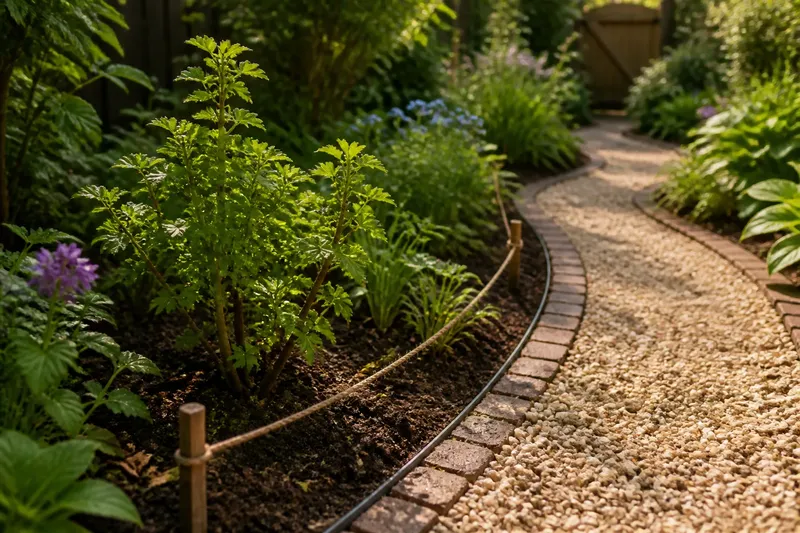
In a mixed bed, loose leaf mould or compost can cover open spaces around established plants while leaving crowns and stems clear. In a vegetable bed, a fine, workable surface may be easier to manage than coarse bark if you plan to sow small seeds or cultivate between rows. Match the material to the planting and the work ahead.
Apply cover without obstructing growth
Remove weeds and unsuitable debris before spreading mulch. If the soil is dry, water it first; a surface layer can slow drying but does not supply water to roots. Spread the material across open ground and keep it away from plant crowns and woody stems.
Leave direct-sown rows uncovered until the seedlings are easy to identify. Once young plants are established, you can cover the spaces between them if that suits the bed. Follow product directions or local horticultural advice where a particular material or planting calls for it.
Keep bare soil useful rather than neglected
Open soil makes it straightforward to rake a seedbed, sow small seeds, inspect seedlings and hoe shallow weeds. Its drawback is exposure: rain may strike directly, while sun and wind can dry the surface or leave a crust, depending on the site.
Keep weeds under control and avoid walking on wet ground, which can compact the bed. If a crust forms, break it gently when the soil is workable. Where runoff or repeated crusting interferes with growth, consider covering the spaces around established plants while preserving open sowing rows.
It is not worth covering every patch simply to make the bed look uniform. Moving a decorative layer aside for every sowing adds work, and a tidy surface is of little use if it hides seedlings that need attention.
How does mulch or bare soil affect plant care?
Does mulch prevent weeds from growing?
A surface cover can make conditions less favourable for some weeds, but it does not remove weeds already rooted in the bed or stop every seed from germinating. Clear existing weeds first and keep checking for new growth.
Should I mulch before sowing small seeds?
Leave the seed row open so seeds can reach the soil and seedlings remain visible. You can cover nearby open ground, then reconsider the row once the young plants are easy to identify.
When should I change from bare soil to mulch?
Consider changing the surface when sowing and early seedling checks are finished, or when exposed ground develops a crust, runoff or troublesome drying. Keep the sowing line clear if you still need to plant or inspect it.
Can mulch touch a plant stem?
Keep mulch pulled back from crowns and woody stems rather than piling it against them. The appropriate placement depends on the plant and material, so consult reliable horticultural guidance for a particular planting.
A worked bed decision follows the plants
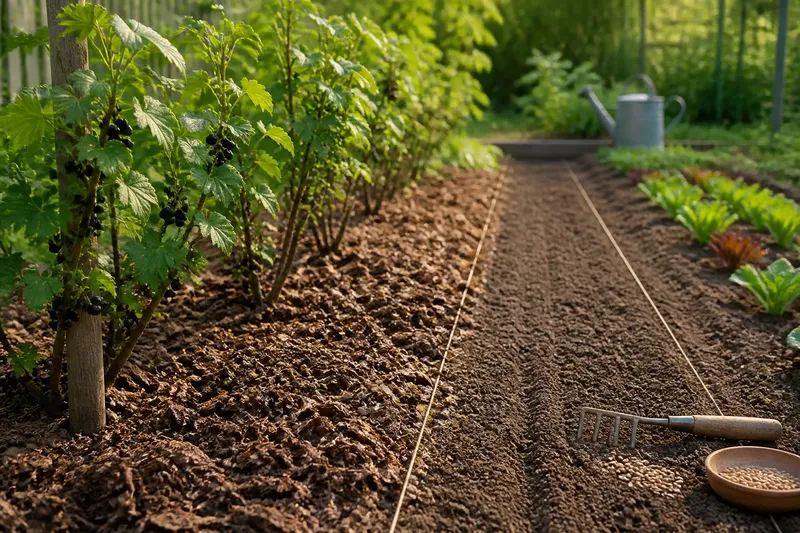
Say you have an invented bed with established currant bushes at one end and a strip planned for spring salad seeds at the other. The bushes are already growing, while the salad strip has not yet been sown; after watering, the exposed ground around the bushes crusts, but the strip needs a fine, clear seedbed.
First, remove weeds from both areas and water the dry ground around the bushes. Next, spread loose leaf mould over the open soil there, keeping it clear of the stems. Leave the salad strip bare, rake it level, and sow into the soil when ready. The resulting decision is local: covered ground around established bushes, an open seedbed for salads, and a clear line for inspecting seedlings.
Recheck the surface as plants develop and after rain or watering. Mulch or bare soil is most useful as a growth-stage decision: preserve access where seeds and seedlings need attention, and cover exposed spaces where a surface layer makes tending the established planting easier.